Updated November 2026 · 6 min read · Reviewed against peer-reviewed evidence
The short answer
The minimum recommended intake for adult women in Australia and New Zealand is about 0.75g of protein per kilogram of body weight a day, or around 0.94g/kg after 70. Many experts suggest aiming higher in midlife, around 1.0 to 1.2g/kg, to protect muscle and bone. For a 70kg woman that's roughly 70 to 85g a day, best spread as 20 to 30g at each meal.
Protein has a reputation as a gym food. It isn't. For women, especially from the 40s onwards, it's one of the most useful things to get right: it keeps you full, supports muscle and bone, and makes meals far more satisfying.
Why protein matters more for women in midlife
Muscle
Muscle mass declines gradually with age, and the drop in oestrogen around menopause speeds things up. Muscle isn't just about strength; it's where much of the sugar from a meal is stored and used. An expert group on protein in older adults (PROT-AGE) recommended 1.0 to 1.2g/kg a day for healthy people over 65, higher with exercise or illness, and many dietitians apply similar targets from midlife.
Bone
The old idea that protein weakens bones hasn't held up. A systematic review found a small positive association between protein intake and bone density, and protein works best alongside enough calcium and vitamin D.
Fullness and cravings
Protein is the most filling macronutrient. Higher-protein diets are linked with better appetite control and keeping weight off. Starting the day with protein can also reduce cravings later, so the 3pm biscuit loses some of its pull.
How much protein is that in food?
Roughly 20 to 30g of protein looks like:
- 3 eggs (about 18–20g)
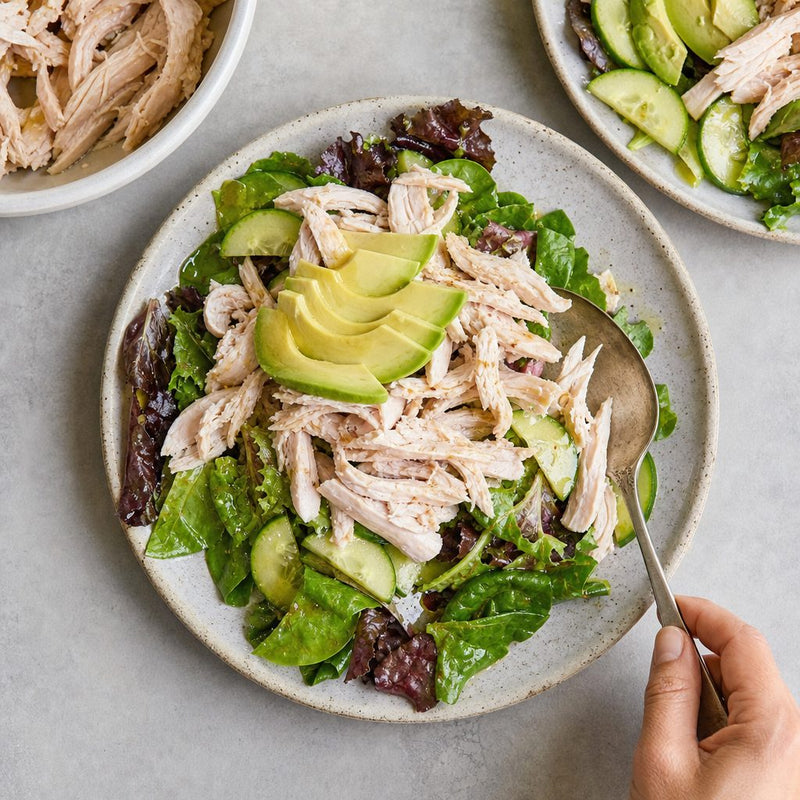
- A palm-sized piece of chicken or fish, about 100g (around 25–30g)
- A cup of plain Greek yoghurt (around 20g, depending on brand)
- A cup of cooked lentils (around 18g)
- 150g firm tofu (around 18–20g)
Plant proteins are easier to combine than you might think. See 5 complete protein sources.
Spread it across the day
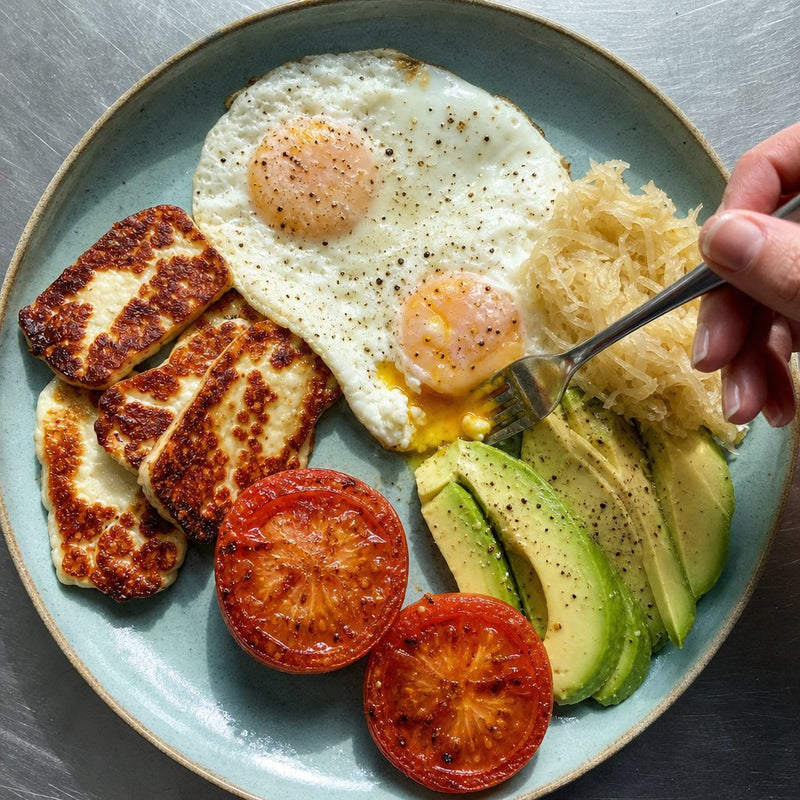
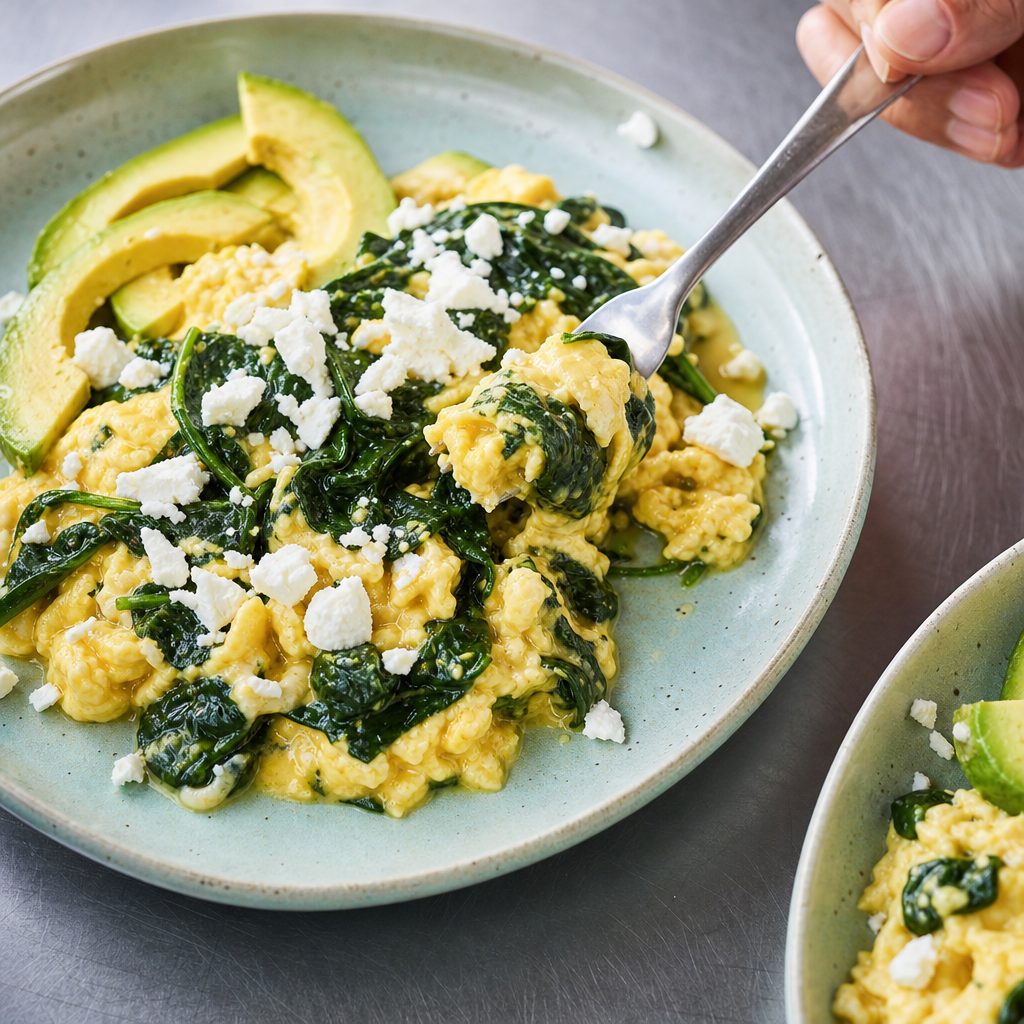
Many women eat very little protein at breakfast and most of it at dinner. Muscles respond better to a steady supply, so aim for a proper serve at each meal. Easy breakfast wins: eggs, Greek yoghurt with nuts and seeds, cottage cheese, smoked salmon, or leftovers.
Pair it with strength training
Protein works best when your muscles have a reason to use it. Two or three sessions of resistance exercise a week, with weights, bands or body weight, alongside enough protein is one of the most effective things you can do for midlife muscle and bone.
Frequently asked questions
Can you eat too much protein?
For healthy people, protein intakes up to around 1.5 to 2g/kg are generally considered safe. If you have kidney disease, talk to your doctor before increasing protein. It's also worth making sure extra protein isn't crowding out vegetables and fibre.
Do I need protein powder?
No. Most women can meet their needs from food. If you use a powder, choose one without added sugar and a short ingredients list.
Is it true that protein makes women bulky?
No. Building significant muscle takes years of heavy training. For most women, more protein simply means better recovery, more strength and feeling fuller.
How much protein should I eat at breakfast?
Aim for 20 to 30g. Three eggs, or Greek yoghurt with nuts and seeds, gets you most of the way there.
Protein at every meal, already planned
The 8-Week Program builds protein into every breakfast, lunch and dinner, with shopping lists and 600+ real-food recipes. One payment, 16 weeks of access.
General information only, not medical advice. If you have kidney disease or another medical condition, check with your doctor before changing your protein intake. Protein values are approximate and vary by product.
References
- National Health and Medical Research Council. Nutrient Reference Values for Australia and New Zealand: Protein. NHMRC
- Bauer J, Biolo G, Cederholm T, et al. Evidence-based recommendations for optimal dietary protein intake in older people: a position paper from the PROT-AGE Study Group. J Am Med Dir Assoc. 2013;14(8):542–59. DOI
- Darling AL, Millward DJ, Torgerson DJ, Hewitt CE, Lanham-New SA. Dietary protein and bone health: a systematic review and meta-analysis. Am J Clin Nutr. 2009;90(6):1674–92. DOI
- Leidy HJ, Clifton PM, Astrup A, et al. The role of protein in weight loss and maintenance. Am J Clin Nutr. 2015;101(6):1320S–1329S. DOI
- Hoertel HA, Will MJ, Leidy HJ. A randomized crossover, pilot study examining the effects of a normal protein vs. high protein breakfast on food cravings and reward signals. Nutr J. 2014;13:80. DOI