Weekend Read · Week 5 · 11 min read · Reviewed against peer-reviewed evidence, October 2026
The short version
Your liver handles most of the alcohol you drink, and it's where a large dose of fructose ends up too. When either arrives faster than it can cope, the liver can turn the excess into fat. Fatty liver, now called MASLD, affects around 30% of adults worldwide and between a third and two-fifths of Australian adults. Most people who have it feel nothing at all.
The encouraging part is how quickly the liver responds. In two small trials in children and teenagers, cutting added sugar lowered liver fat within days to weeks. Week 5 takes what you've built back out into the world: restaurants, birthdays, and one drink, chosen well.
Your liver is the quiet one doing the heavy lifting
Four weeks in, you may have noticed fewer 3pm crashes and clearer mornings. What you can't feel is what's been happening in your liver, the organ that sorts, stores and processes a large share of what you eat and drink.
This week, coffee and gluten come back, you're allowed one drink, and sugar and fruit stay out. That makes it a good week to talk about the liver, because the two things it has to work hardest to deal with, alcohol and fructose, are exactly the two this program has been asking you to watch.
Fructose and alcohol take a similar road
Alcohol goes almost straight to the liver
Your body can't store alcohol, so it treats clearing it as a priority, and most of it is broken down in the liver (Cederbaum, 2012). That's one reason regular heavy drinking is so closely tied to fat building up in the liver.
Fructose is the half of sugar the liver deals with
Table sugar is half glucose, half fructose. Almost every cell in your body can use glucose. Fructose is different: it's handled mainly by the gut and the liver. When more fructose arrives than the liver needs, it can convert some of it into fat. Scientists call this de novo lipogenesis, which simply means "making new fat".
Here's the finding that surprises people. In a 2018 study in mice, researchers traced where fructose actually went. At small doses, around 90% of it was cleared by the small intestine before it ever reached the liver. Only at larger doses did the intestine get overwhelmed and fructose spill through to the liver (Jang et al., 2018). The authors suggested the gut acts as a kind of shield for the liver.
It's an animal study, so we can't map the numbers straight onto people. But it fits a familiar pattern: dose and speed matter. A piece of fruit is a small, slow dose. A glass of juice or a can of soft drink is a big, fast one.
Fatty liver is common, and usually silent
In 2023, three large international liver societies agreed to rename non-alcoholic fatty liver disease. It's now called metabolic dysfunction-associated steatotic liver disease, or MASLD. "Steatotic" means fatty. The new name puts the focus on what drives it: to be diagnosed, a person with excess liver fat needs at least one of five cardiometabolic risk factors, such as raised blood sugar, blood pressure or blood fats (Rinella et al., 2023).
The same group created a separate category, MetALD, for people with metabolic risk factors who also drink more. For women, that's 140 to 350 grams of alcohol a week, roughly 14 to 35 Australian standard drinks (Rinella et al., 2023). It's a reminder that sugar and alcohol aren't separate stories for the liver. They often add up.
How common is it?
Very. A 2023 analysis pooling 92 studies and more than nine million people put the global prevalence at about 30% of adults, and found it had risen over time (Younossi et al., 2023). A 2026 review of Australian research found between one-third and two-fifths of Australian adults are affected, depending on how it's defined (Vaz et al., 2026).
Why you might not know
MASLD is usually silent in its early stages. There's no pain and no obvious symptom. It's closely tied to insulin resistance, the state where your body needs more and more insulin to manage blood sugar, and to type 2 diabetes. More than 60% of people with type 2 diabetes have a fatty liver (Mohiuddin et al., 2025). If you have prediabetes, diabetes or PCOS, it's worth knowing this connection exists, and worth a conversation with your GP.
Cutting added sugar lowered liver fat, in specific groups
Two well-known trials tested what happens to liver fat when sugar comes out. Both were in young people, which matters.
In the first, 41 children aged 9 to 18 with obesity and a high sugar intake had all their meals provided for nine days. Their food had the same calories as usual, but starch replaced most of the sugar. After just nine days, their liver fat fell from a median of 7.2% to 3.8%, and the rate at which their livers made new fat dropped sharply. Insulin measures improved too (Schwarz et al., 2017). There was no comparison group, so it's early evidence, but the speed is striking.
The second was a randomised trial in 40 boys aged 11 to 16 who already had fatty liver disease. Half followed a diet with free sugars kept under 3% of calories for eight weeks, with meals provided for the whole household. Their liver fat fell from 25% to 17% on average, compared with 21% to 20% in boys eating as usual (Schwimmer et al., 2019). The authors called the results preliminary.
Neither study was in adult women, so we can't promise the same result for you. What they do show is that the liver responds to what's on the plate, and it responds faster than most people expect. Eight weeks happens to be the length of this program.
Whole fruit isn't the same as juice
If fructose matters, should you worry about fruit when it comes back next week? The evidence suggests not. Whole fruit comes with fibre and water, it takes time to chew, and the amount of fructose in one piece is modest. Juice strips most of that away.
In three large US cohorts following more than 187,000 health professionals, eating more whole fruit, especially blueberries, grapes and apples, was linked with a lower risk of type 2 diabetes. Drinking more fruit juice was linked with a higher risk (Muraki et al., 2013). These were observational studies, so they show a link rather than proof of cause. But the direction is consistent with everything above. (For more on juice, see our Week 1 Weekend Read.)
The evidence map
A snapshot of the studies behind this article. "Strong" means a systematic review or meta-analysis with a consistent result. "Moderate" means good-quality individual studies. "Emerging" means early or small studies.
| Theme | Study | Strength | Finding |
|---|---|---|---|
| How common it is | Younossi et al., 2023 | Strong | 92 studies: about 30% of adults worldwide, and rising. |
| Australia | Vaz et al., 2026 | National data | Between one-third and two-fifths of Australian adults affected. |
| Insulin resistance link | Mohiuddin et al., 2025 | Moderate | Review: shared roots in insulin resistance; usually silent early; over 60% of people with type 2 diabetes have liver fat. |
| Where fructose goes | Jang et al., 2018 | Emerging | In mice, the gut cleared small doses of fructose; large doses spilled through to the liver. |
| Less sugar, less liver fat | Schwarz et al., 2017 | Emerging | 41 children, 9 days, no control group: liver fat roughly halved. |
| Less sugar, less liver fat | Schwimmer et al., 2019 | Moderate | Randomised trial, 40 boys with fatty liver, 8 weeks: liver fat fell from 25% to 17%. |
| Fruit vs juice | Muraki et al., 2013 | Moderate | Whole fruit linked with lower type 2 diabetes risk; juice with higher. Observational. |
| Alcohol and sleep | Ebrahim et al., 2013 | Moderate | Alcohol speeds falling asleep but disrupts the second half of the night. |
| Menopause and liver fat | Dong et al., 2025 | Moderate | Review: MASLD becomes more common and more severe in women after menopause. |
Out in the wild: how to eat out this week
This is the week members ask, "How do I do this in real life?" Eating out is mostly easy. Protein, vegetables, potatoes, rice and bread are all fine this week. The sugar hides in a few predictable places, and once you know them, you can order almost anywhere.
Watch the sauces, not the plate
Many restaurant sauces are sweetened, sometimes heavily. The usual suspects:
- Teriyaki and other glossy Japanese glazes
- Sweet chilli, the default dipping sauce on half of Australia's menus
- Satay, which often has sugar alongside the peanuts
- Oyster sauce and many stir-fry sauces
- Balsamic glaze, which is reduced and usually sweetened, unlike plain balsamic vinegar
- BBQ sauce, tomato relish, sticky marinades and honey-mustard dressings
You did the work in Week 3 learning to read labels. Restaurants don't have labels, so the rule of thumb is simple: if it's glossy, sticky or sweet-smelling, ask.
How to order
- Ask for sauces and dressings on the side. Then you decide how much.
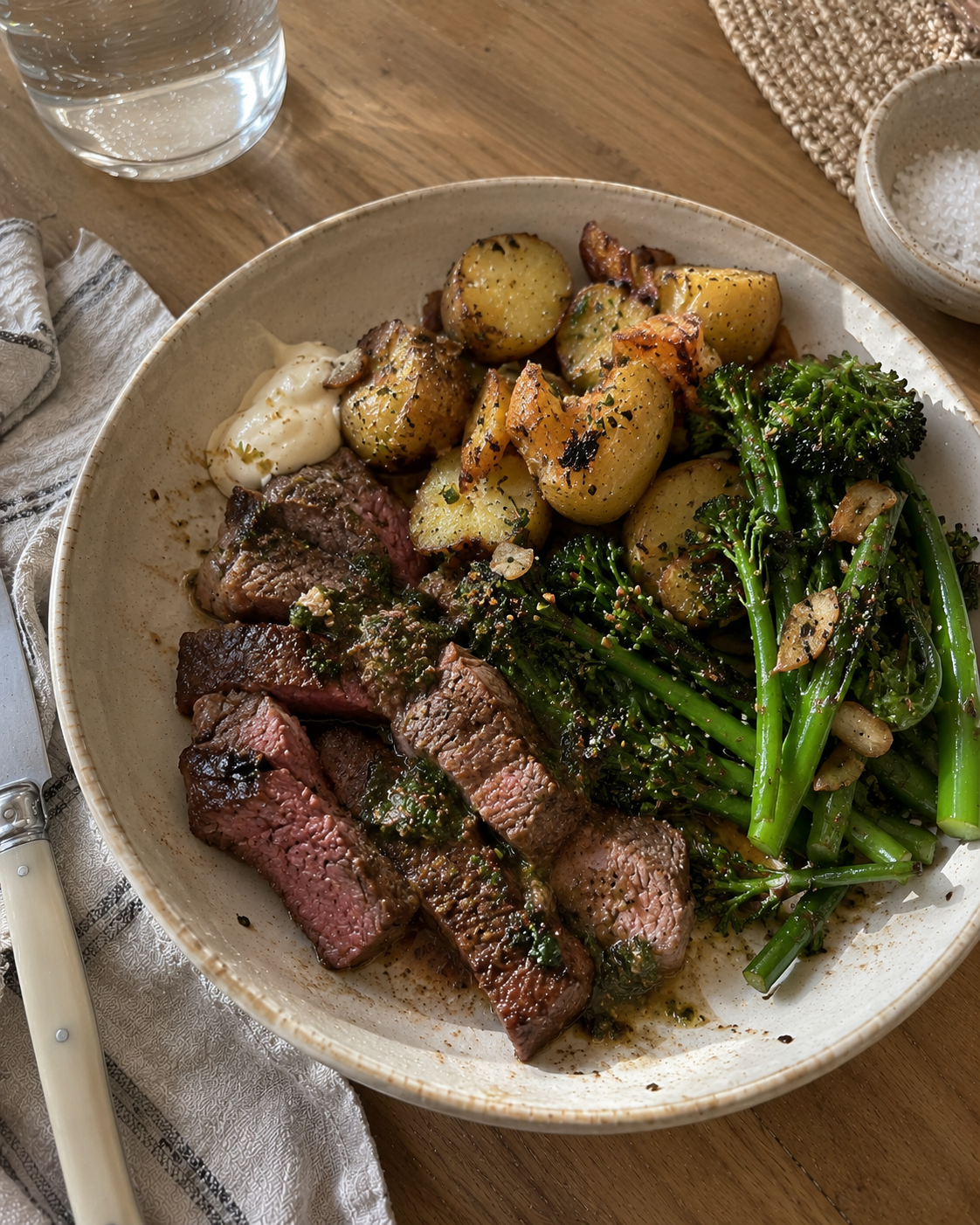
- Choose grilled, roasted or steamed protein with vegetables or salad, and add rice, potatoes or bread if you're hungry.
- At Japanese places, sashimi and salt-seasoned skewers are easier than teriyaki.
- At Italian places, ask for olive oil and plain vinegar or lemon instead of balsamic glaze.
- At the pub, a steak or grilled fish with salad and chips works. Skip the relish.
- For dessert, order a cheese plate, a peppermint tea, or a coffee. Coffee is back this week.
Choosing your one drink
This week's rules allow one drink. Make it one you'll enjoy, and one without added sugar:
- Dry wine, red or white. Avoid dessert wines and sweeter styles.
- Beer, if that's what you love.
- Spirits with soda water and fresh lime. Tonic, ginger beer, cola and premixed drinks are usually sweetened.
- Skip cocktails built on syrups and juice.
For context, Australia's national guidelines say healthy adults should drink no more than 10 standard drinks a week and no more than 4 on any one day, and that the less you drink, the lower your risk (NHMRC, 2020). A standard drink is 10 grams of pure alcohol, and a generous restaurant glass of wine is often more than one. Sip it slowly, with food, and alternate with water.
Use your Sunday cook-up as a safety net
If you've got a dinner out on Thursday, plan a lighter, simple lunch from your cook-up that day, and keep a leftover meal in the fridge for the night after. Real life is lumpy. The program is built to bend around it, not break.
If you're in perimenopause or menopause
Two things change in midlife that make this week's topic more relevant.
Liver fat. In women, MASLD becomes more common and more severe after menopause. Falling oestrogen appears to affect how the liver, muscle and fat tissue handle fuel, and to make insulin resistance more likely. Whether hormone therapy changes this in women is still poorly studied (Dong et al., 2025). Your GP is the right person to talk to about that.
Alcohol, sleep and flushes. Alcohol helps you fall asleep faster, which is why it feels relaxing. But across many studies, it disrupts sleep in the second half of the night (Ebrahim et al., 2013), right when many women in perimenopause are already waking. In a small US study of women aged 45 to 55, daily drinking was linked with more hot flushes and night sweats (Sievert et al., 2006). A large UK study of older postmenopausal women also found alcohol intake was linked with having had hot flushes (Hunter et al., 2012). Both were observational, so they can't prove alcohol causes flushes. But if your nights are rough, notice whether your one drink, or its timing, makes a difference.
What this article isn't saying
- That one drink, or one restaurant meal, harms your liver. It doesn't. This week is about practising choices, not avoiding life.
- That cutting sugar will reverse fatty liver in adults. The best trials were in children and teenagers, and outcomes in adults weren't tested in them.
- That fruit is a problem. Whole fruit is different from juice, and it comes back next week.
- That you need to drink at all. One drink is allowed, not expected.
Common questions
Should I get my liver checked?
If you have prediabetes, type 2 diabetes, PCOS or other metabolic risk factors, it's a reasonable question to ask your GP. Because fatty liver is usually silent, you won't know by how you feel. Your GP can decide whether blood tests or a scan make sense for you.
Can I save up my one drink for the weekend?
Yes. Most people find it works best on the night they're out, with food. It's one drink, though, not a week's worth saved up for Saturday.
What if I'm at a friend's place and dessert comes out?
Say thank you, have a cup of tea, and enjoy the company. If you do have a few bites, that's not failure, and nothing is undone. Pick up where you left off at breakfast.
I take medication for diabetes. Does the drink matter?
It can. Alcohol can interact with some diabetes medicines and affect blood sugar. Check with your GP or diabetes educator before you drink, and keep monitoring as you normally would.
About this article
Written by the I Quit Sugar team for the 8-Week Program, and reviewed against the peer-reviewed sources listed below.
Not medical advice. This article is general education. It isn't a diagnosis or a substitute for advice from your own health professional. If you're managing a medical condition, are pregnant or breastfeeding, or take medication, speak with your doctor before making significant changes to how you eat.
References
- Cederbaum AI. Alcohol metabolism. Clin Liver Dis. 2012;16(4):667–85. DOI
- Jang C, Hui S, Lu W, et al. The small intestine converts dietary fructose into glucose and organic acids. Cell Metab. 2018;27(2):351–361.e3. DOI
- Rinella ME, Lazarus JV, Ratziu V, et al. A multisociety Delphi consensus statement on new fatty liver disease nomenclature. Hepatology. 2023;78(6):1966–1986. DOI
- Younossi ZM, Golabi P, Paik JM, et al. The global epidemiology of nonalcoholic fatty liver disease (NAFLD) and nonalcoholic steatohepatitis (NASH): a systematic review. Hepatology. 2023;77(4):1335–1347. DOI
- Vaz K, Clayton-Chubb D, Kemp WW, Roberts SK, Majeed A. Fatty liver disease in Australia: a narrative review on the epidemiology, natural history, prognostication and management in people with metabolic dysfunction. Med J Aust. 2026;224(5):e70195. DOI
- Mohiuddin MS, Neha NT, Mahir JUK, et al. Metabolic dysfunction associated fatty liver disease and type 2 diabetes: pathophysiological links, epidemiological trends, and clinical implications. Front Endocrinol. 2025;16:1669478. DOI
- Schwarz JM, Noworolski SM, Erkin-Cakmak A, et al. Effects of dietary fructose restriction on liver fat, de novo lipogenesis, and insulin kinetics in children with obesity. Gastroenterology. 2017;153(3):743–752. DOI
- Schwimmer JB, Ugalde-Nicalo P, Welsh JA, et al. Effect of a low free sugar diet vs usual diet on nonalcoholic fatty liver disease in adolescent boys: a randomized clinical trial. JAMA. 2019;321(3):256–265. DOI
- Muraki I, Imamura F, Manson JE, et al. Fruit consumption and risk of type 2 diabetes: results from three prospective longitudinal cohort studies. BMJ. 2013;347:f5001. DOI
- National Health and Medical Research Council. Australian guidelines to reduce health risks from drinking alcohol. 2020. NHMRC
- Dong J, Dennis KMJH, Venkatakrishnan R, Hodson L, Tomlinson JW. The impact of estrogen deficiency on liver metabolism: implications for hormone replacement therapy. Endocr Rev. 2025;46(6):790–809. DOI
- Ebrahim IO, Shapiro CM, Williams AJ, Fenwick PB. Alcohol and sleep I: effects on normal sleep. Alcohol Clin Exp Res. 2013;37(4):539–49. DOI
- Sievert LL, Obermeyer CM, Price K. Determinants of hot flashes and night sweats. Ann Hum Biol. 2006;33(1):4–16. DOI
- Hunter MS, Gentry-Maharaj A, Ryan A, et al. Prevalence, frequency and problem rating of hot flushes persist in older postmenopausal women: impact of age, body mass index, hysterectomy, hormone therapy use, lifestyle and mood in a cross-sectional cohort study of 10,418 British women aged 54–65. BJOG. 2012;119(1):40–50. DOI